Last updated November 18, 2026

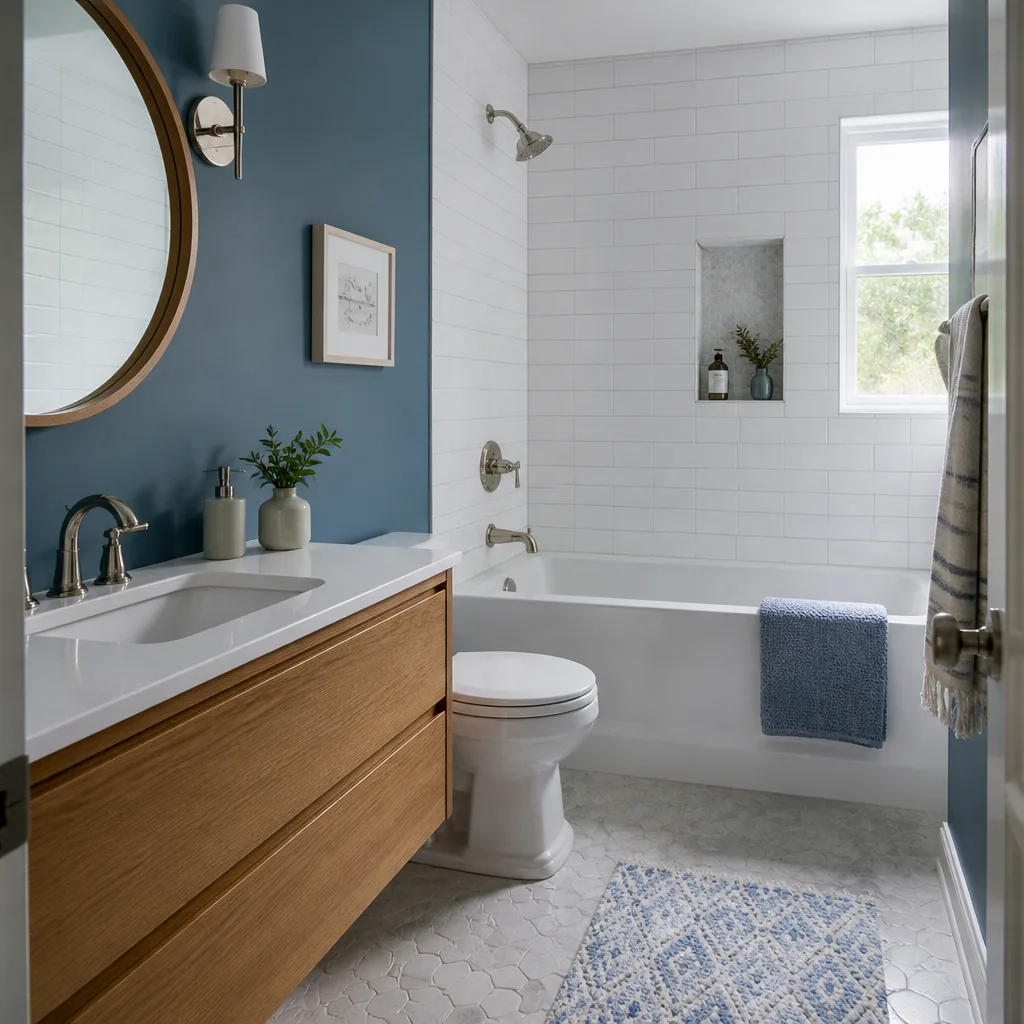
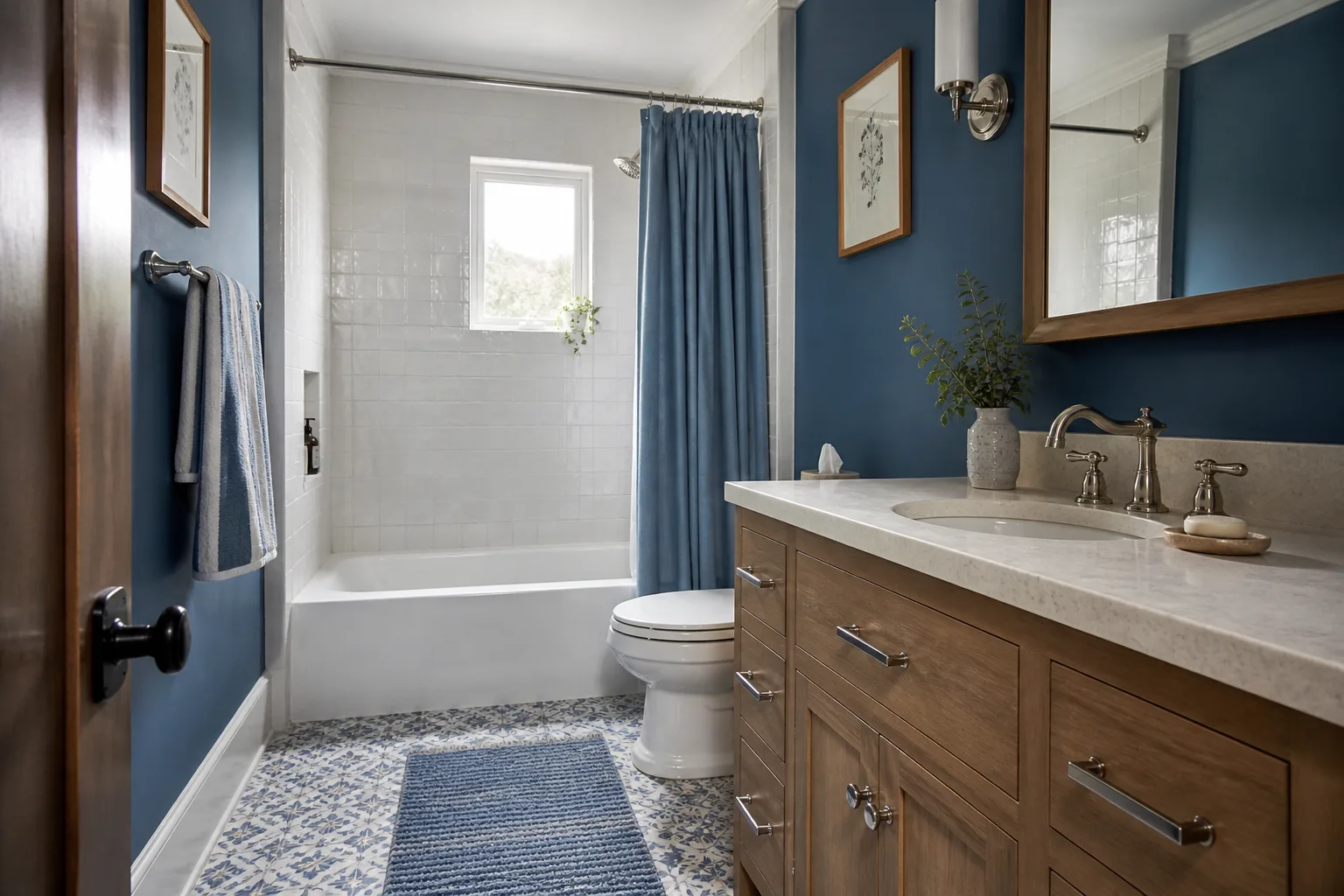



Free in-home design visit - walk-in showers, tub-to-shower conversions, and Kohler, Moen, and Delta fixtures planned to your exact space
The Complete Guide to Bathroom Remodeling in North Las Vegas
Most bathroom remodels in the Las Vegas Valley go over budget for a reason that has nothing to do with taste. Homeowners pick the faucet, the tile, and the vanity before anyone confirms the rough-in dimensions behind the wall. Then the plumber opens the wall, finds the drain where it doesn’t belong, and half the order goes back to the store. This guide walks through the order a bathroom specialist actually uses: layout first, fixtures second, finishes last. We’ll cover how North Las Vegas water affects what you should buy, what Clark County and the City of North Las Vegas each enforce, and how to spot a generalist bid dressed up as specialist work.
Quick Answer
A successful bathroom remodel in North Las Vegas starts with confirming the plumbing layout and rough-in dimensions, then selecting fixtures, then choosing tile and finishes. Skipping that order is the most common reason projects run over budget. Budget for the project as a whole, price it per job with a written line-item estimate, and pull permits before demolition starts rather than after.
Styles & brands we work with
- Walk-in shower
- Tub-to-shower
- Freestanding tub
- Kohler
- Moen
- Delta
- Frameless glass
Table of Contents
- Why North Las Vegas Hard Water Changes What You Buy
- The Correct Decision Sequence for a Bathroom Remodel
- Matching Fixture Tier to the Room That’s Actually Being Built
- What Clark County Requires vs. What North Las Vegas Enforces
- Tub-to-Shower Conversion and Walk-In Shower Decisions
- Waterproofing Behind the Tile and Why It Matters Most
- How to Build a Realistic North Las Vegas Bathroom Budget
- Red Flags in Contractor Bids
Why North Las Vegas Hard Water Changes What You Buy
North Las Vegas water runs hard. The Las Vegas Valley’s supply averages around 290 parts per million in mineral content, and that number matters more to your bathroom than the color of the tile. Hard water leaves scale on glass, etches chrome, dulls brushed finishes, and shortens the working life of any fixture that wasn’t built for it. If you choose finishes in a showroom without accounting for this, you’ll be scrubbing mineral deposits off your shower door within a year.
What that means in practice:
- Glass shower enclosures need a plan. Standard clear glass shows every water spot. A protective coating applied at install, or a textured or frosted option, keeps the enclosure looking presentable without daily squeegee work.
- Finish choice is a hard-water decision. Polished chrome holds up better against scale than some matte finishes that trap mineral film in their texture. Brushed nickel and certain brushed golds need more attention. Ask specifically how a finish behaves in hard water before you commit.
- Faucet cartridges and shower valves work harder. Higher mineral content means more wear on internal components. This is one argument for spending a bit more on the valve and cartridge assembly than on the visible trim, and it’s why brand matters. Moen and Delta both build replaceable cartridges that hold up; Toto and Grohe shower valves are engineered for longevity under conditions that punish cheap internals.
- Water softener provisions belong in the planning phase. If you plan to add a softener or already have one, tell your remodeler before rough-in. The plumbing loop for a softener affects where supply lines run.
- Tile and grout selection shifts. Small-format tile with dense grout lines is harder to keep clean in hard water than large-format tile with narrow, sealed grout joints. Schluter edge profiles also give you a clean transition that doesn’t rely on caulk lines that collect mineral film.
Las Vegas Valley neighborhoods like Whitney have been built up over decades, and many homes there still run original fixtures from the 1980s and 1990s. Those fixtures were spec’d for water conditions that haven’t changed much, but the finishes have worn. When we walk a home in Whitney, the first thing we look at is scale buildup on the showerhead and around the drain. It tells you more about what the fixtures have endured than the fixtures themselves do.
Water hardness isn’t a reason to avoid a nice bathroom. It’s a reason to pick the right products the first time. Call (844) 834-0636 and we’ll talk through what’s actually in your water and what that should mean for your fixture list.
The Correct Decision Sequence for a Bathroom Remodel
The order in which you make decisions determines whether your budget holds. Get it right and the project runs clean. Get it wrong and you’ll be returning fixtures and paying for change orders before tile is even on site. Here is the sequence a bathroom specialist follows.
- Define the layout and use case. Who uses this bathroom, how often, and what has to change? A hall bath used by kids has different requirements than a primary ensuite. Write it down before you look at a single product.
- Confirm rough-in dimensions and existing plumbing. This is the step most homeowners skip. Drain location, supply line positions, valve rough-in depth, venting, and wall cavity depth all constrain what fixtures will fit. Measure them, or have a professional measure them, before anything gets ordered.
- Resolve structural and code questions. Is the wall load-bearing? Does converting a tub to a shower require changing the drain? Does the existing exhaust fan vent to the outside? These answers drive scope.
- Set your budget with a contingency. Not a single number, but a range with room for what’s behind the wall. Older North Las Vegas homes often hide surprises: galvanized supply lines, cast-iron drains, or previous work that wasn’t permitted.
- Select fixtures. Now that you know the dimensions, the plumbing, and the budget, you can pick the toilet, the valve, the showerhead, the sink, and the faucet. This is when brands like Toto and Grohe become relevant choices rather than aspirational names.
- Select tile and finishes. Tile color, grout, edge profile, and paint come last because they respond to everything above. Choosing tile color first is the single most common sequencing error we see.
- Pull permits and schedule the work. Permits come before demolition. Inspections happen at rough-in and final stages depending on the scope.
- Install in the right order. Rough-in plumbing and electrical, then waterproofing and substrate, then tile, then fixtures, then trim and paint.
That’s the whole sequence in eight steps. Each step depends on the one before it. When a homeowner comes to us with fixtures already purchased and no measurements, the cheapest path forward is usually to work backward and confirm whether the products will actually fit before a single box is opened.
If you’re starting fresh, the Bathroom Remodeling North Las Vegas page lays out the three services we focus on: full remodels, walk-in showers, and tub-to-shower conversions. Those are the three scopes this sequence applies to.
Matching Fixture Tier to the Room That’s Actually Being Built
Not every bathroom needs the same spec, and pretending otherwise is how budgets get wasted on the wrong things. A guest bath that gets used twice a week doesn’t need a Toto washlet and a Grohe thermostatic valve. A primary ensuite that sees daily use and was designed to feel like a spa probably does. The right answer lives in how the room gets used, not in what looks nicest in a showroom.
Here’s how we think about tier:
- Guest or hall bath: reliability first. Sterling by Kohler gives you Kohler-engineered quality at an accessible price point, and American Standard toilets have a long track record of trouble-free service. A Moen or Delta faucet at this tier is genuinely good, not a compromise.
- Primary ensuite: daily-use fixtures need to hold up to daily use. This is where Toto toilets with efficient flushing and Grohe shower valves with solid thermostatic control make sense. So does a Delta or Kohler faucet with a replaceable cartridge that will be easy to service in five years.
- Accessible or aging-in-place bath: function drives spec. A walk-in shower with a low threshold, a linear drain, and a properly waterproofed substrate matters more than which trim series you choose. Grab bar blocking needs to be built in before tile goes up.
- Resale-minded bath: buy recognizable brands at a sensible tier. Moen, Delta, and American Standard are known and expected. A buyer walking through a North Las Vegas home will recognize those names, which is worth more than an unfamiliar European badge.
Because we carry an eight-brand portfolio – Kohler, Moen, Delta, American Standard, Toto, Schluter, Sterling, and Grohe – we can match tier to use case rather than push whatever happens to be available. A homeowner whose budget is tight gets a Sterling and American Standard spec that works. A homeowner who wants European luxury gets Grohe and Toto. Both are legitimate choices.
If you’re not sure which tier fits your bathroom, the easiest way to find out is to walk through the room with someone who specifies these fixtures for a living. Call (844) 834-0636. We answer 24/7, and estimates are free.
What Clark County Requires vs. What North Las Vegas Enforces
This is where homeowners get caught off guard, and it’s worth understanding before you sign a contract. Clark County and the City of North Las Vegas are separate permitting authorities. If you live within the city limits, your permit comes from the City of North Las Vegas, not the county. If you’re in an unincorporated area of the valley, the county has jurisdiction. The requirements overlap but aren’t identical, and the plan review process differs enough that a contractor who’s only worked county jobs may not be ready for a city submittal.
What triggers a permit in a bathroom remodel, generally speaking:
- Moving or adding plumbing supply lines or drains
- Relocating or adding electrical circuits, outlets, or lighting
- Removing or altering a load-bearing wall
- Converting a tub to a shower, when the drain location changes
- Changing a window or exterior door in some cases
What usually doesn’t require a permit: swapping a faucet, replacing a toilet in the same location, painting, and replacing tile over an existing substrate when the substrate itself isn’t being altered. That said, requirements change and interpretations vary by plan reviewer. The reliable move is to ask the City of North Las Vegas building department directly about your specific scope, or hire someone who pulls permits as part of the job rather than as an optional add-on.
A few things that tend to surprise homeowners:
- Ventilation is not optional. Bathroom exhaust fans need to vent to the exterior, not into the attic. This matters in a hot climate where moisture trapped in an attic can cause problems over time.
- Shower drain and waterproofing details are inspected. The waterproofing layer behind the tile is a code-relevant part of the job, not just a nice-to-have. Schluter shower systems are engineered around this and pass inspection cleanly when installed correctly.
- Electrical work in wet locations has specific requirements. GFCI protection, receptacle placement, and lighting fixtures rated for damp locations all apply.
We pull permits and pass inspections on the work we do, and that includes plan review through the correct jurisdiction. If you’re unsure whether your address sits inside the city limits or in unincorporated Clark County, that’s the first question to answer before the project scope is set.
Tub-to-Shower Conversion and Walk-In Shower Decisions
Converting a tub to a shower is the single most common bathroom change we plan in North Las Vegas. It makes sense for a lot of reasons: a walk-in shower is easier to use as you get older, it frees up floor space in a small bathroom, and it usually reads as more modern on a listing. But it isn’t just a demolition project. The drain has to move, the waterproofing has to be rebuilt, and the wall cavity may need work to accommodate a proper shower valve and grab bar blocking.
What a conversion typically involves:
- Remove the tub and expose the plumbing. This is when you find out what’s behind the wall. Original plumbing in older Whitney or North Las Vegas homes may need upgrading at this stage.
- Relocate the drain. A tub drain is at one end; a shower drain is usually centered or placed at the low point of a sloped pan. This is a plumbing permit item.
- Install a waterproofed shower substrate. Schluter shower systems are built around a bonded waterproofing membrane with a pre-sloped pan. Get this wrong and you’ll be replacing a subfloor in three years.
- Build in blocking for grab bars. Even if you don’t install grab bars now, block for them. It costs almost nothing during rough-in and saves a full tile tear-out later.
- Install tile and trim. Schluter profiles give you a clean, caulk-free edge at the transition points, which matters for long-term waterproofing.
- Set the fixtures. A Grohe or Toto shower valve and head at this stage makes the finished product feel like a proper walk-in shower rather than a tub space that’s been converted.
The choice between a full walk-in shower and a tub-to-shower conversion often comes down to whether the existing plumbing layout supports the change with minimal disruption. Sometimes a walk-in shower install is straightforward. Sometimes the conversion reveals a plumbing issue that has to be resolved first. Taking the room through the sequence above is the way to find out which scenario you’re in before you commit.
If you’re thinking about a bathroom remodeling project that includes a walk-in shower, or you want to explore the walk in shower option specifically, we’re happy to walk through the room with you.
Waterproofing Behind the Tile and Why It Matters Most
Nobody sees the waterproofing layer after the project is done. That’s exactly why it’s the most important part of a shower build. Tile and grout are not waterproof. They’re a decorative surface over a waterproof assembly. If the assembly behind the tile fails, you won’t know for a year or two, and by then the damage has spread.
What a professional shower waterproofing assembly includes:
- A sloped substrate. The pan has to slope toward the drain at a consistent rate before any waterproofing goes down. A flat pan holds water against the membrane.
- A bonded waterproofing membrane. Schluter Systems engineered their entire shower assembly around this concept, from the drain flange through the wall membrane. It’s a system, not a single product, and it works because every component is designed to be used with the others.
- Properly treated corners and seams. This is where most failures start. The corners and the shower valve penetration are the highest-risk points.
- A curb detail that actually keeps water in. Curbless walk-in showers need a specific drain and slope plan. There’s no way to fudge this.
This is the argument for hiring a bathroom specialist rather than a general contractor who does bathrooms among other work. A generalist may install tile beautifully and still miss a Schluter detail that’s specific to the shower system. The visible result looks the same on day one. On year three, it doesn’t.
We’ve talked with homeowners in North Las Vegas who had to redo a shower because the waterproofing wasn’t done right the first time. It’s an expensive lesson, and it’s avoidable. Ask your contractor specifically what waterproofing system they use and how it’s detailed at the drain, the corners, and the valve. If the answer is vague, that’s your answer.
How to Build a Realistic North Las Vegas Bathroom Budget
A bathroom budget in North Las Vegas should be built as a range, not a single number. The range protects you against what’s behind the wall and against scope changes that emerge during the project. The written estimate you get before work starts sets the final price, and everything quoted should be line-itemed so you can see where the money is going.
A typical budget conversation covers these categories:
- Demo and disposal – removing the old tub, toilet, vanity, tile, and hauling it out
- Plumbing rough-in – any supply or drain changes, shower valve replacement, tub-to-shower drain relocation
- Electrical – GFCI outlets, lighting, exhaust fan, any new circuits
- Substrate and waterproofing – cement board or Schluter board, membrane, drain assembly
- Tile and finish setting – floor and wall tile, grout, edge profiles
- Fixtures – toilet, shower valve and trim, showerhead, vanity, sink, faucet
- Vanity and countertop – depending on the scope, a new vanity or a refaced unit
- Paint and trim
- Permit and inspection fees – required when the scope triggers them
- Contingency – usually a percentage of the hard costs, held for unknowns
Where the number lands depends on tier. A Sterling and American Standard spec with basic tile and a Moen faucet comes in at a very different number than a Toto and Grohe spec with large-format tile and Schluter profiles throughout. That’s the by-design flexibility of an eight-brand portfolio: you choose the tier that fits, and the budget follows.
A few budget habits worth building:
- Ask for a written line-item estimate. Any bid that comes as a single number with no detail is a bid you can’t compare.
- Confirm what’s included. Permits, haul-away, and final inspection are all items that some bids leave out.
- Hold a contingency you don’t plan to spend. You’ll either use it or you won’t, and if you don’t, you spent less than budget.
- Don’t choose finishes before the rough-in is measured. It’s a budget leak, not an aesthetic one.
Call (844) 834-0636 to schedule a free estimate. We answer 24/7. Fast dispatch from 7am to 7pm, Sunday through Friday.
Red Flags in Contractor Bids
Comparing bathroom bids is harder than it looks, because generalist contractors and bathroom specialists don’t itemize the same way. Here are the red flags we tell homeowners to watch for.
- A bid with no waterproofing line item. Every shower install has a waterproofing step. If it isn’t listed, either it isn’t being done properly or it’s buried in another line where you can’t verify it.
- No mention of permit responsibility. A bid that doesn’t state whether the contractor pulls permits, or whether the homeowner is expected to, is a bid that hasn’t thought through the job.
- Fixture list with no brand or model numbers. “Faucet – included” is not a fixture list. You should see brand and model spec’d on every item.
- A price that moved up between conversation and contract. Written estimates shouldn’t change once work is agreed. If the number moves, that’s a sign the scope wasn’t measured before it was quote.
- A scope that includes work outside bathrooms. A contractor selling kitchen and bathroom and roofing work in one bid isn’t a bathroom specialist. That’s fine for some jobs. It’s not the profile you want for a shower rebuild.
- No stated waterproofing system. Ask specifically what membrane is being used and how the drain is being detailed. Vague answers on this point should give you pause.
- No written line-item estimate. Without one, you can’t compare bids and you can’t hold anyone to scope.
Bathroom specialists bid the whole job with visible detail because the whole job is bathrooms. Generalists bid what they can see and adjust as they go. That difference shows up in the bid before it shows up in the build.
Common Mistakes to Avoid
- Choosing fixtures before measuring rough-in dimensions. The single most expensive sequencing error. You’ll end up returning products or paying a plumber to move a drain that could have been planned for. Bathroom specialists confirm dimensions before a single order is placed.
- Assuming all water is like your previous home’s water. North Las Vegas water is hard enough that finishes, glass, and cartridges need to be chosen with that in mind. A polished finish that worked elsewhere may end up dulled within a year here.
- Buying the whole fixture package from one brand tier. A guest bath and a primary ensuite shouldn’t have the same spec. Matching tier to use case gets you a better result for less money than matching tier for consistency.
- Skipping permits to save money. Any change to plumbing, electrical, or structural elements needs a permit from the correct authority – the City of North Las Vegas or Clark County. Unpermitted work becomes a headache when you sell or when an inspector sees it later.
- Hiring a generalist for a shower conversion. A tub-to-shower conversion depends on waterproofing and plumbing specifics. A contractor who does bathrooms a few times a year is not going to get the Schluter detail right the way a specialist will.
- Choosing tile color before deciding layout. Tile is the last decision, not the first. Lock in layout, plumbing, and fixture rough-in before you fall in love with a color.
- Skipping grab bar blocking during rough-in. Even if you don’t need grab bars now, blocking for them costs almost nothing during the job and saves a full tear-out later. Aging-in-place planning belongs in the rough-in phase.
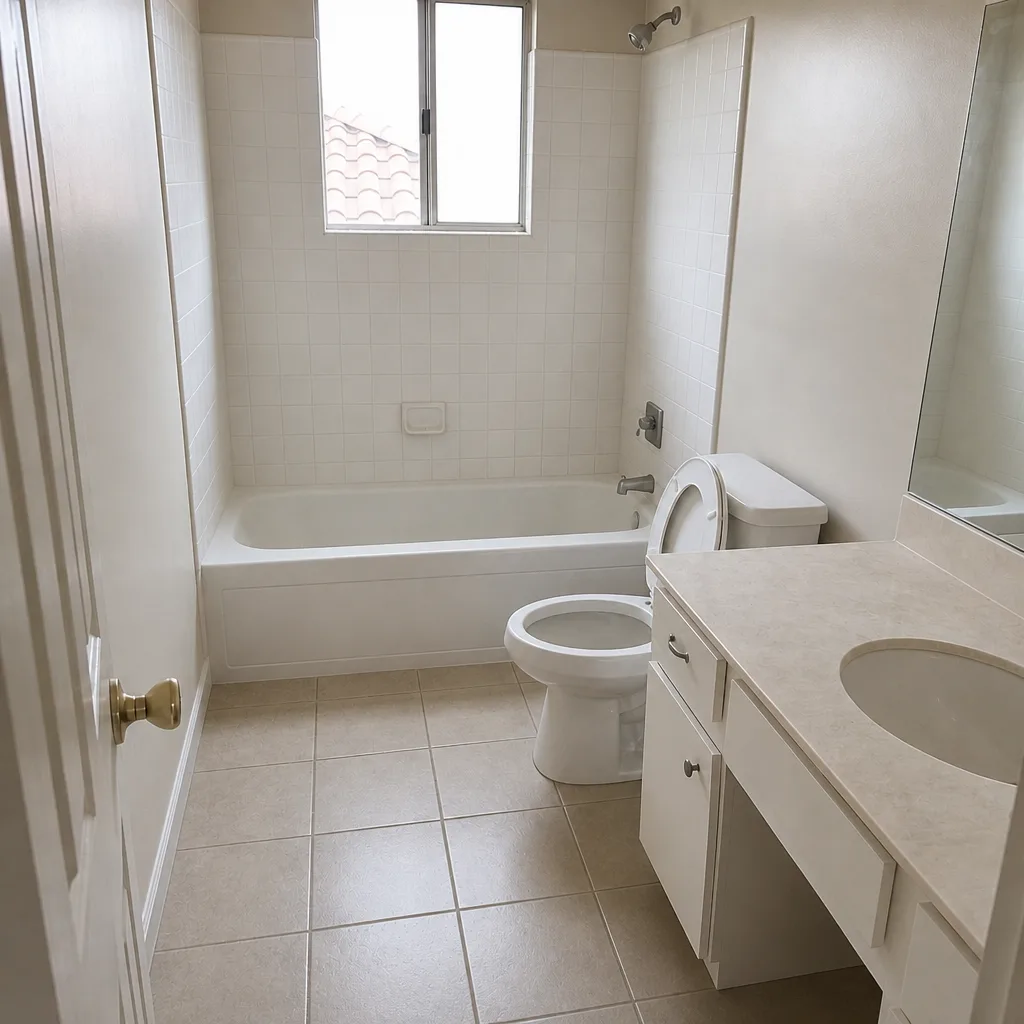
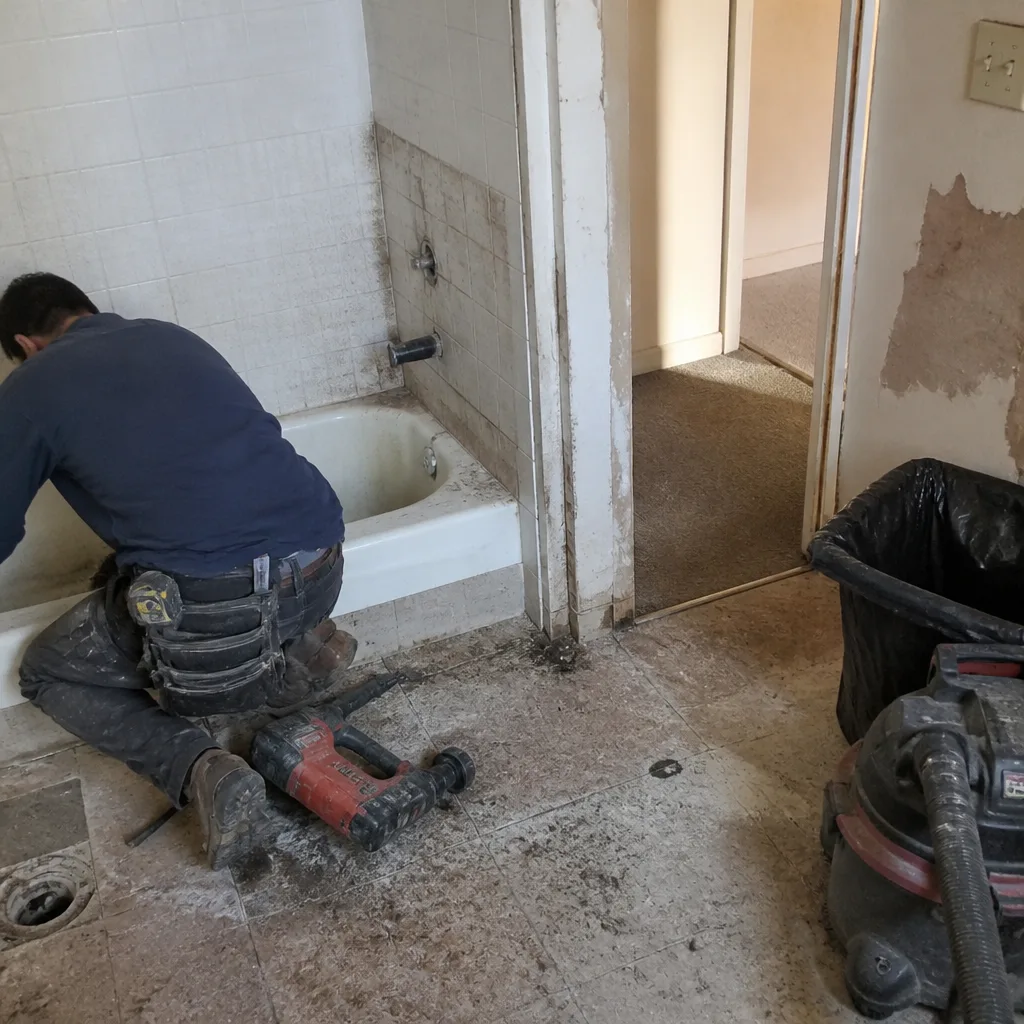
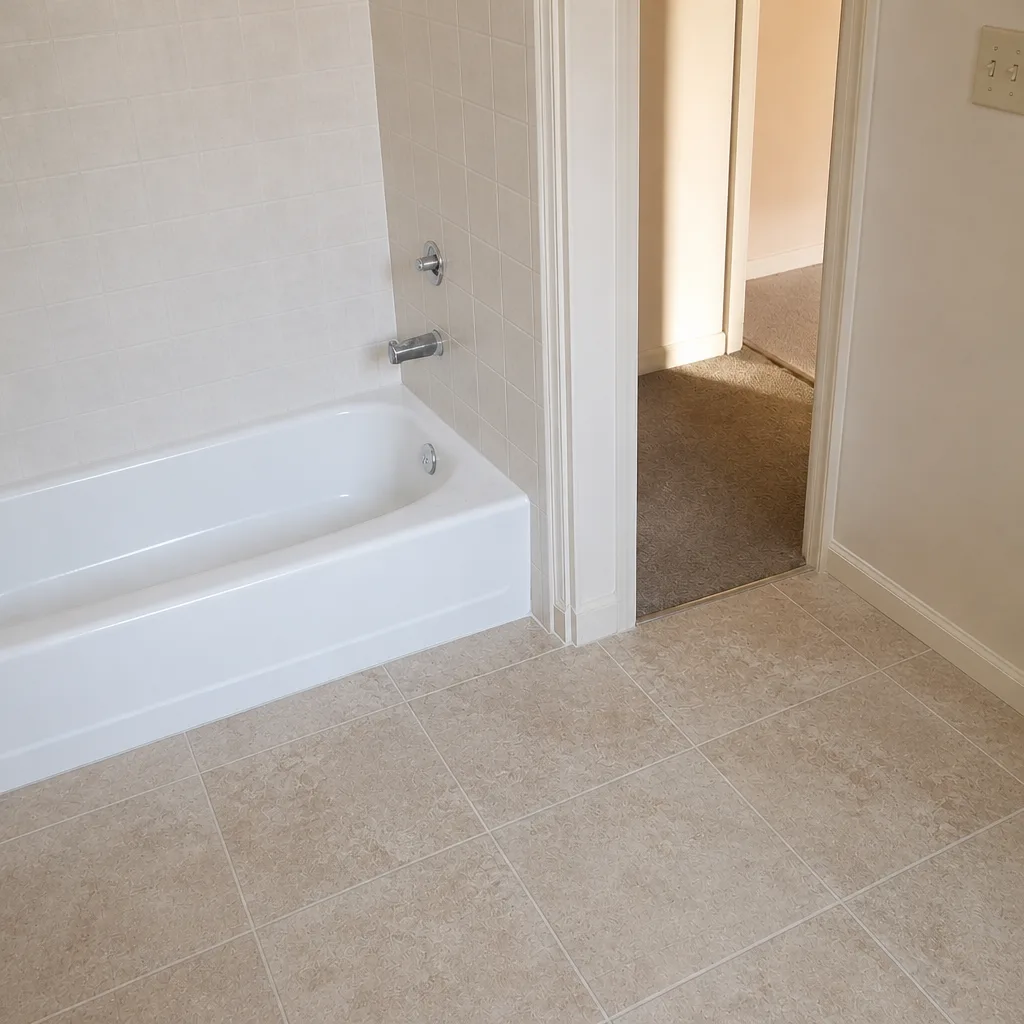
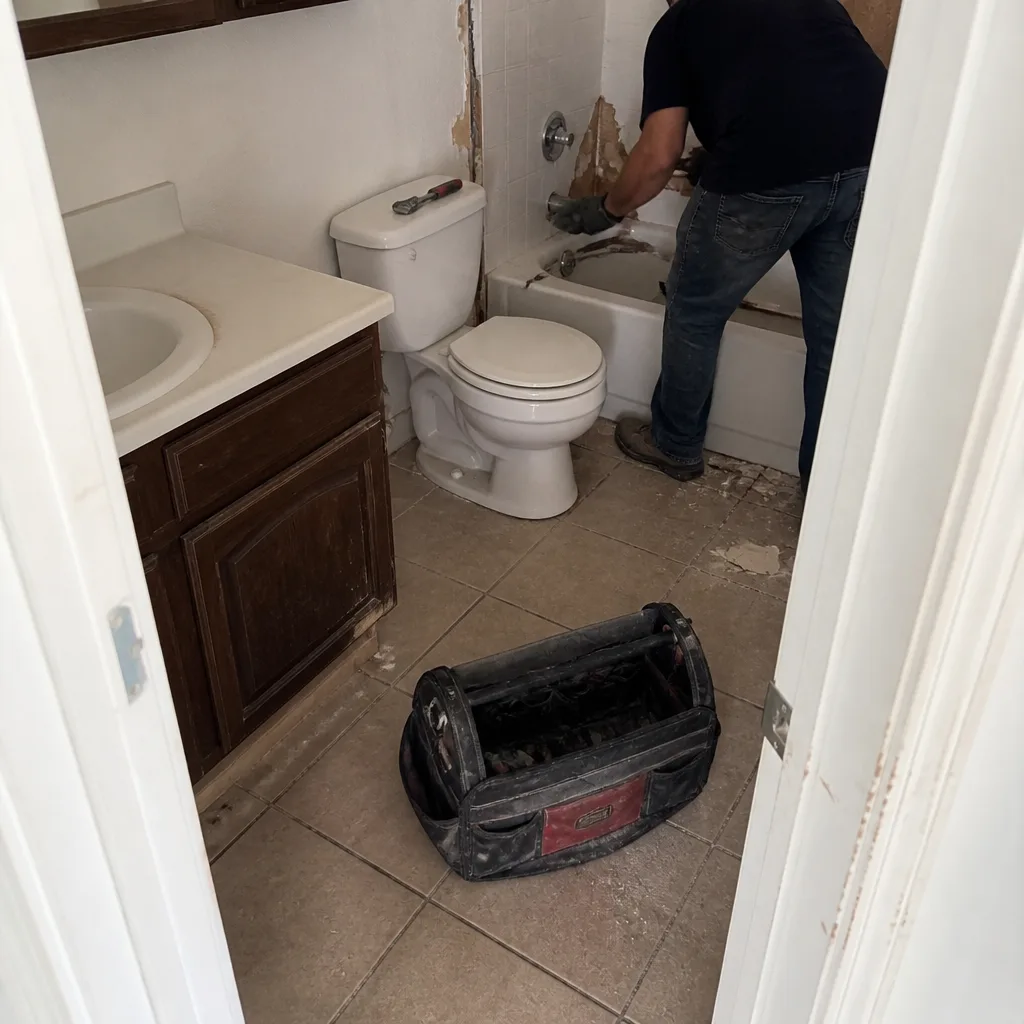
See the difference
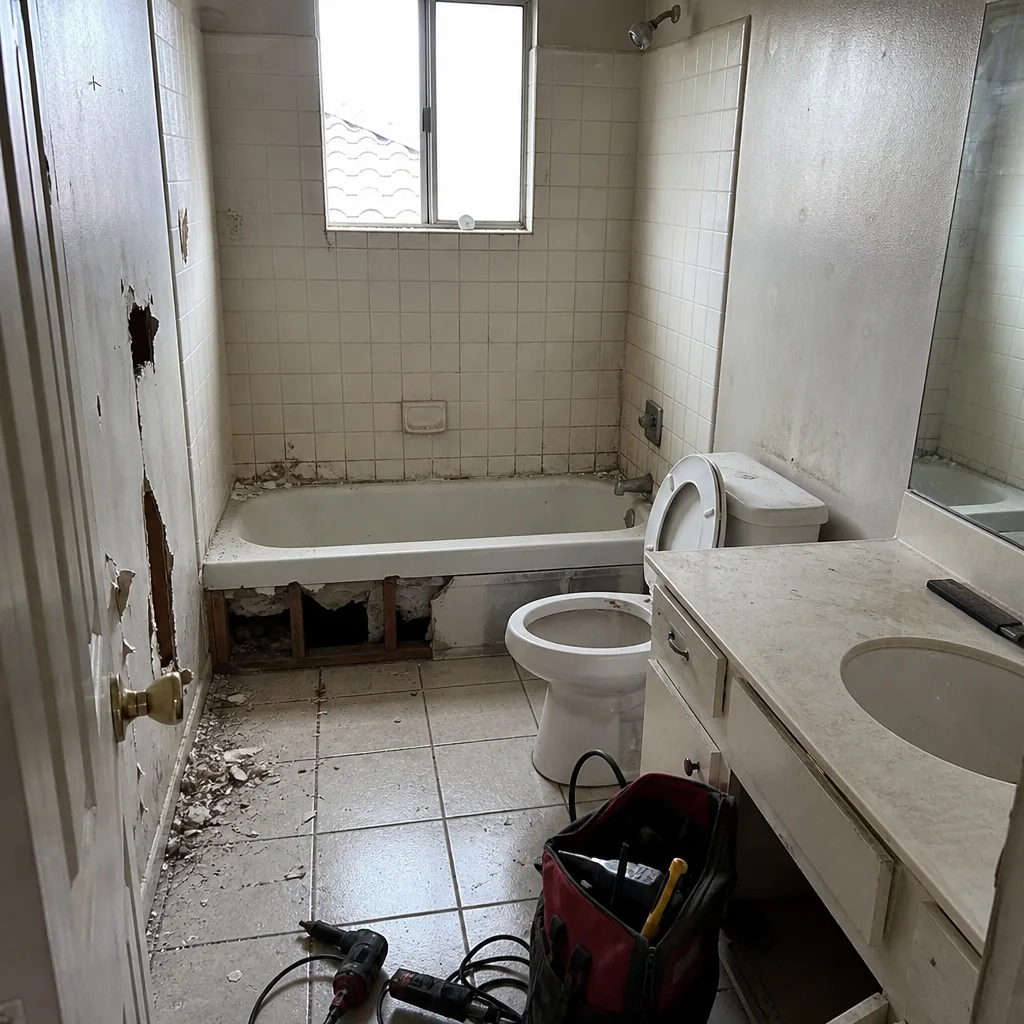 Before
 After
 Before
 After
 Before
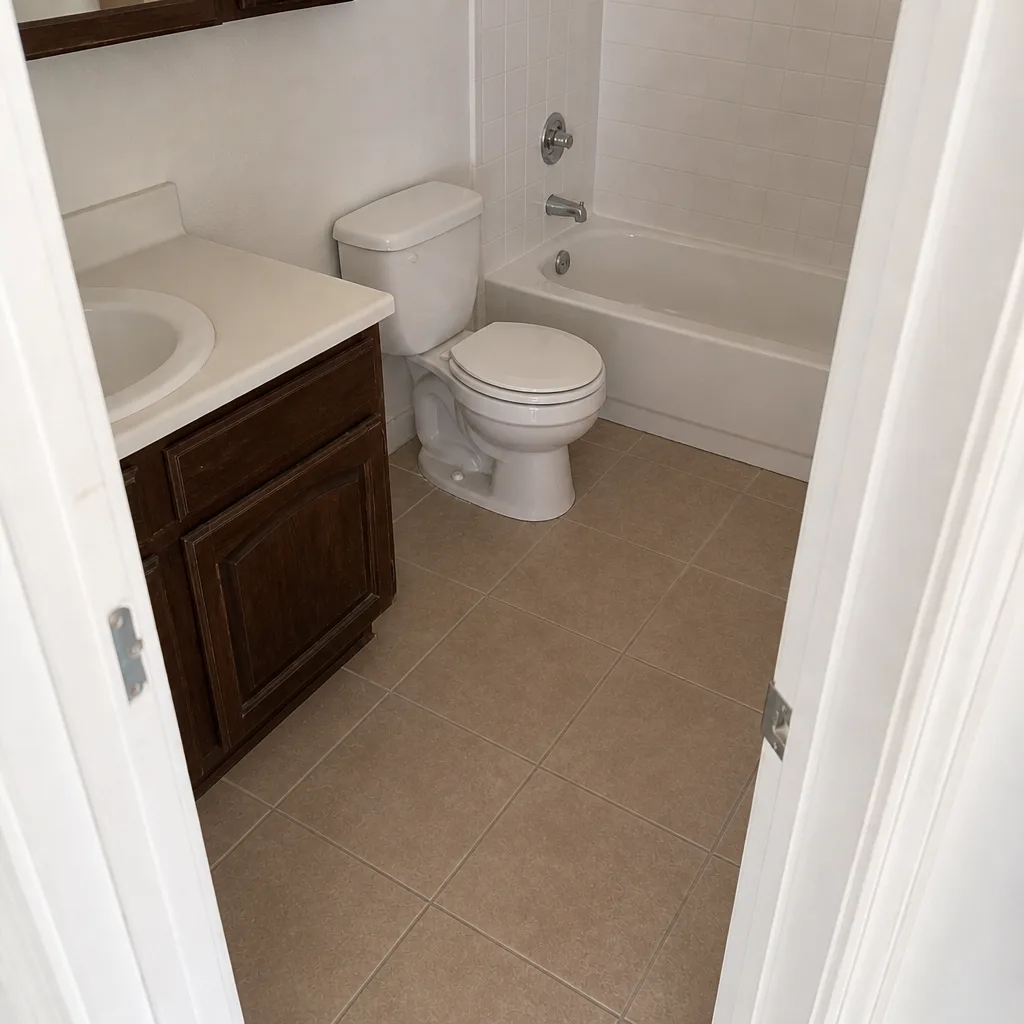 After
When to Call a Professional
Some jobs are genuinely DIY-friendly. Swapping a faucet, replacing a showerhead, and painting a vanity are all things a careful homeowner can handle. But there are scenarios where a professional is the right call, not a caution: any change to the plumbing rough-in, any tub-to-shower conversion, any shower rebuild where the waterproofing has to be redone, any electrical work in a wet location, and any project where the wall cavity has to be opened. Those are professional territory, and getting them wrong is expensive to undo.
If your bathroom project involves any of those, the first step is a conversation with someone who specializes in bathrooms rather than a generalist contractor. Bathroom Remodeling North Las Vegas offers free estimates in North Las Vegas. Call (844) 834-0636. We answer 24/7. Fast dispatch from 7am to 7pm, Sunday through Friday.
Frequently Asked Questions

Plan the layout and confirm rough-in dimensions first, then choose fixtures, then choose tile and finishes. That order prevents the returns and change orders that happen when fixtures are chosen before the plumbing measurements are confirmed.
Usually yes. A tub-to-shower conversion changes the drain location and often involves plumbing work, which triggers a permit. If you’re inside the city limits, your permit comes from the City of North Las Vegas; if you’re in unincorporated Clark County, from the county. Confirm the jurisdiction before scope is set.
We work with eight brands: Kohler, Moen, Delta, American Standard, Toto, Schluter, Sterling, and Grohe. That range covers value tier through luxury, so the choice is driven by use case and budget rather than availability.
Timeline depends on scope. A walk-in shower install or a tub-to-shower conversion typically moves faster than a full remodel with new plumbing, tile, and fixtures throughout. A written estimate should state the expected schedule in the scope, and one of the things we recommend asking before signing is where the schedule contingency is written.
North Las Vegas water averages around 290 ppm in mineral content. That leaves scale on glass, dulls finishes, and wears on cartridges and valves. Choosing the right finishes and the right tier of fixture valve assembly means the bathroom holds up rather than looking worn after a year.
A bonded waterproofing membrane system. Schluter Systems is one specific assembly with a pre-sloped pan, drain flange, and wall membrane designed to work together. The important thing is that the system is named in the bid and detailed at the drain, the corners, and the valve penetration.
A generalist bid tends to omit the waterproofing detail, list fixture brands without model numbers, and cover work outside bathrooms. A bathroom specialist will list waterproofing, give brand and model on every fixture, and state whether permits are pulled and by whom. If the bid includes kitchen and roof work alongside your bathroom, that’s the sign.
A walk-in shower install means installing a new shower where one already exists or where the plumbing is already set up. A tub-to-shower conversion involves removing an existing tub, moving the drain, and building a new shower in its footprint. The conversion is more involved and more code-relevant.
The Bottom Line
The order of your decisions determines the outcome of your bathroom remodel. Layout first, rough-in second, fixtures third, tile and finishes last. North Las Vegas water conditions shape what finishes and fixtures make sense. Clark County and the City of North Las Vegas have separate permit processes, and it matters which jurisdiction your address falls under. A specialist with a multi-brand portfolio – from Sterling to Toto, from American Standard to Grohe – can match fixture tier to actual use case rather than pushing a single tier across all bathrooms. Waterproofing is the part of the build nobody sees, and it’s the part that determines whether the job lasts. Get the sequence right, hire someone whose whole job is bathrooms, and the project stays on budget.
Ready to plan your project? Call Bathroom Remodeling North Las Vegas at (844) 834-0636 to schedule your free estimate. We answer 24/7. Fast dispatch from 7am to 7pm, Sunday through Friday.
Written by the team at Bathroom Remodeling North Las Vegas.